


A Trip to Paris
The last time I made Cassoulet was in 2012 when I was a student at the Cordon Bleu school in Paris. I remember it as being a hearty stew with white beans and at least four different kinds of meat. With a recent 4-week trip to Paris lined up, I was excited to try making this dish again Toulouse-style, with access to authentic ingredients such as confit duck, Toulouse sausages, and thick-cut bacon!
Cassoulet originates from the Languedoc area of Southwestern France, named after its cooking pot, le cassole. Although various regions differ in what constitutes an authentic cassoulet, all agree that enough time should be given to making this dish to allow the various flavors to shine through. Although lamb and duck are standard ingredients, you could also use pork or goose in this dish. Below is my recipe for Toulousian-style Cassoulet along with some tips on how to make this dish in Paris.
What sort if beans to use?
It’s recommended to use white beans that hold their shape during cooking, such as French flageolet beans, Great Northern beans, cannellini, or navy beans. You can used canned beans, however I believe it’s best to cook dried beans from scratch. This way, there is less risk from over-cooking the beans and you can also use the the cooking liquids to later flavor your Cassoulet.
What sort of Sausage and Bacon to use?
Toulouse Sausages and thick-cut French Bacon
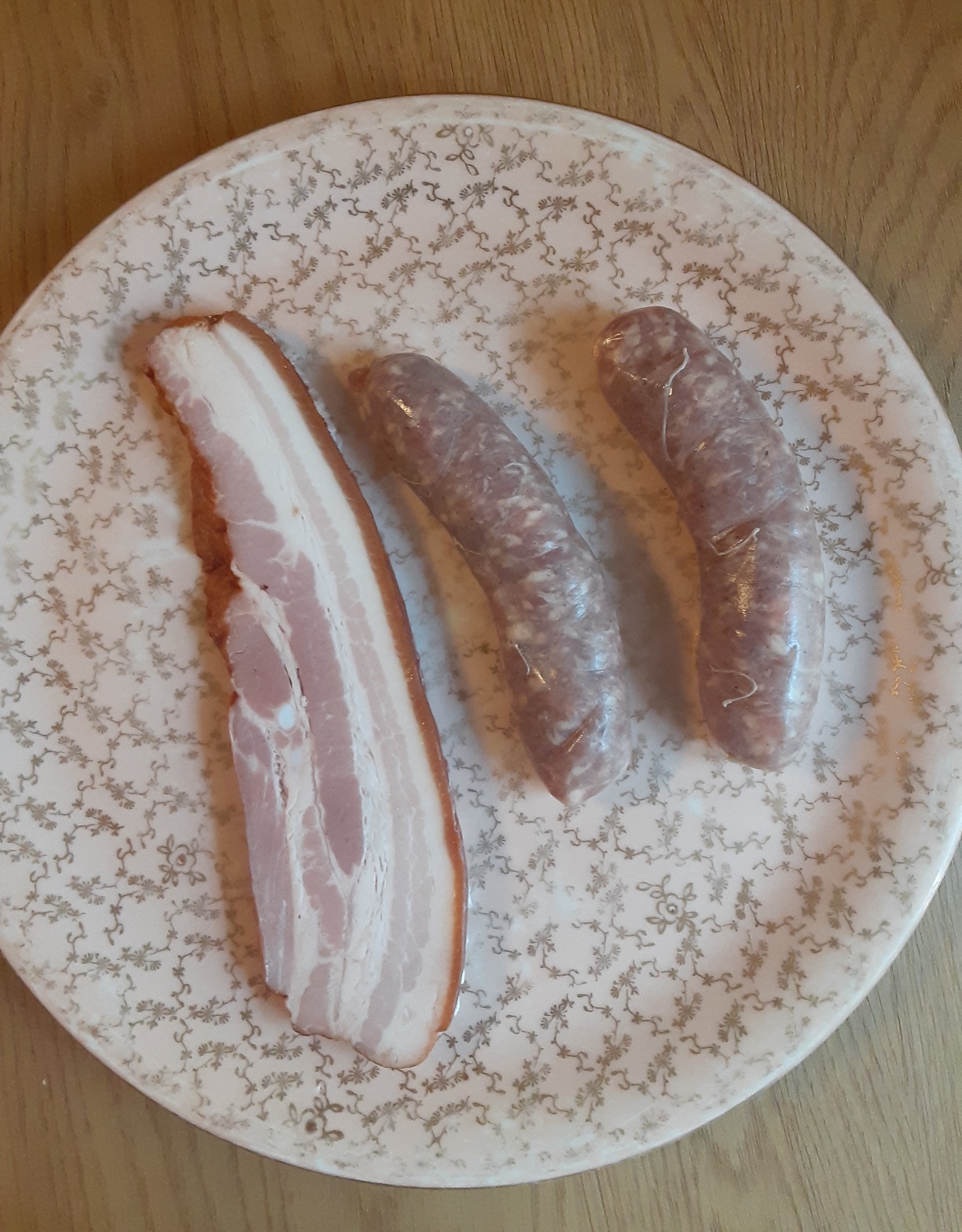
One of the most exciting things about making Cassoulet in Paris was having easy access to Toulouse Sausages, which are made of pork, garlic, and white wine. Most butchers (boucheries) in Paris sell these saucisses de Toulouse, in fact I even saw them for sale at the department store Monoprix. However, if they are not available in your area, you can substitute using a mild Italian Pork Sausage or a Polish kielbasa; try and avoid sausages that use strong flavors such as fennel or chiles.
The Bacon: In France, thick-cut poitrine demi-sel, or unsmoked, lightly salted bacon is traditionally used in order to support a mild flavor in Cassoulet. However, if this type of bacon is difficult to find, then most types of thick-cut bacon (smoked or unsmoked) can be used.
Do I really need to use Duck Confit?
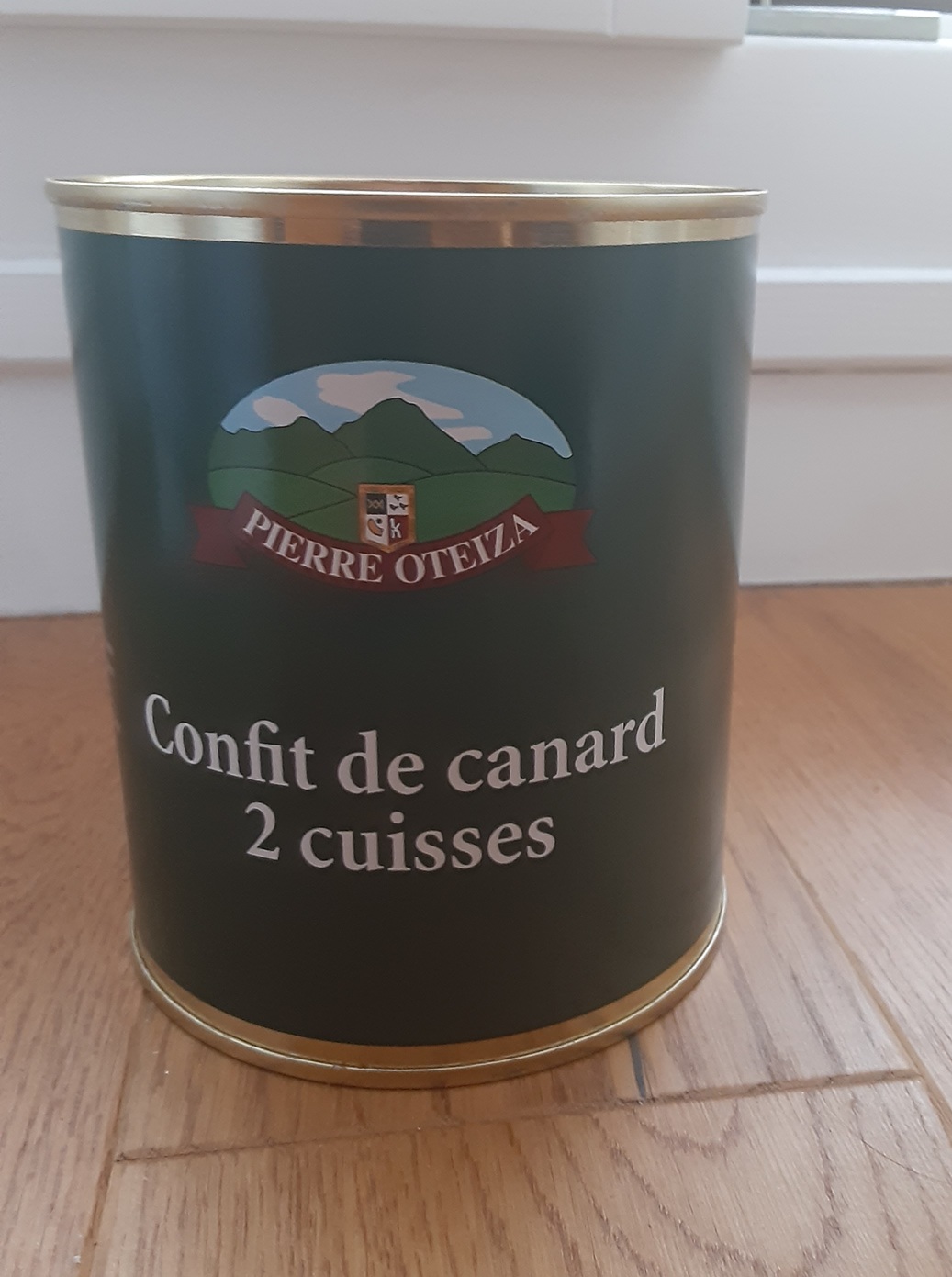
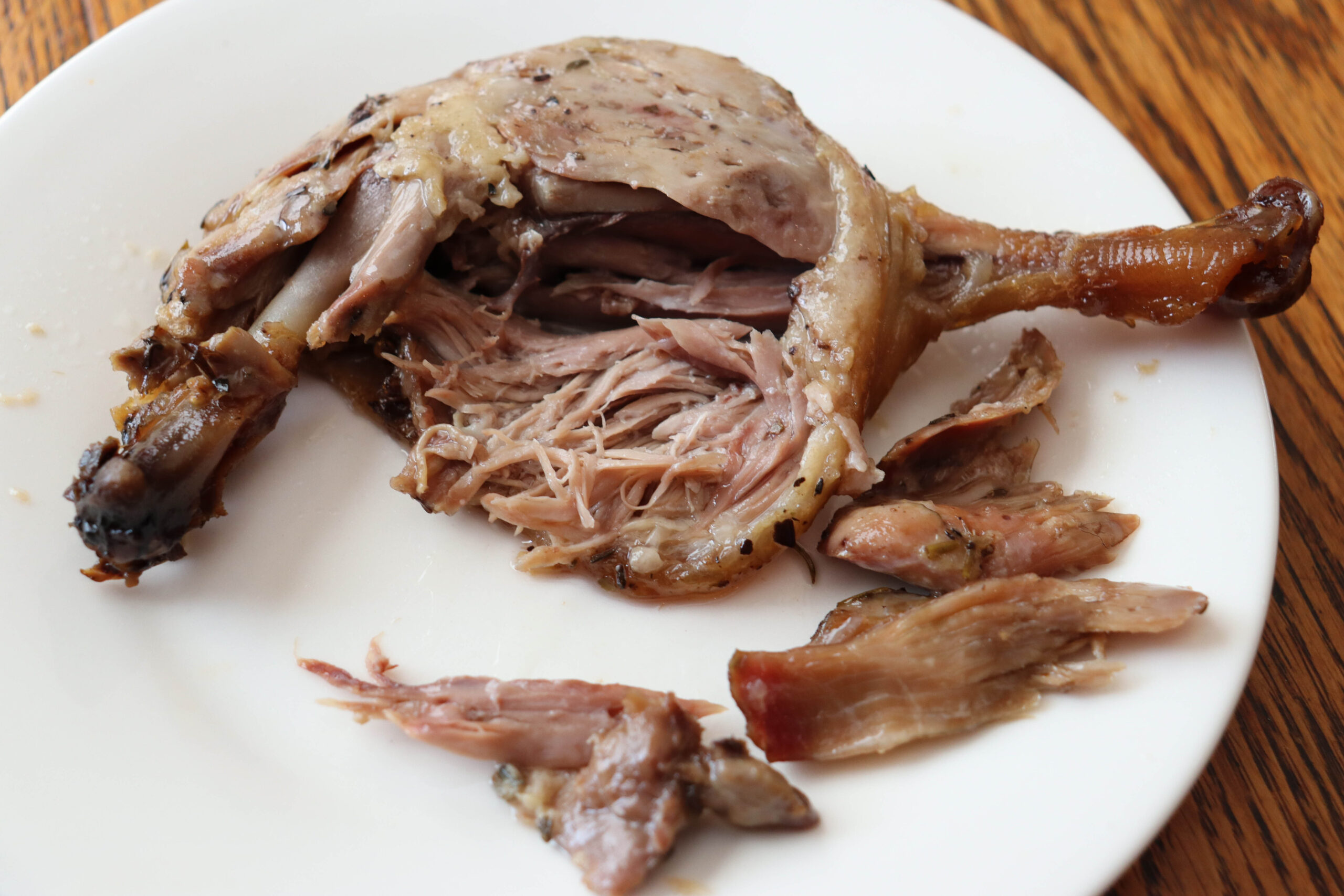
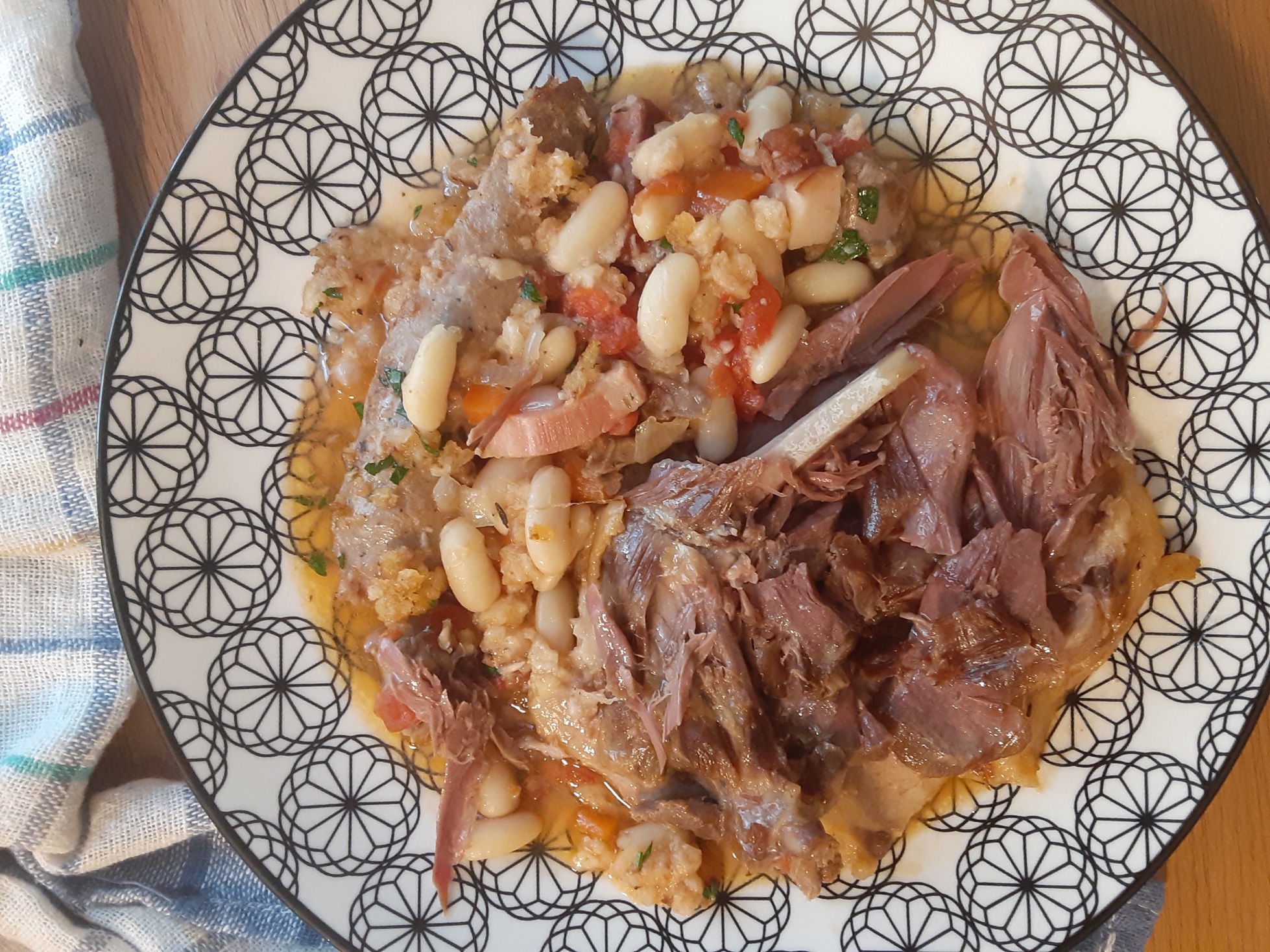
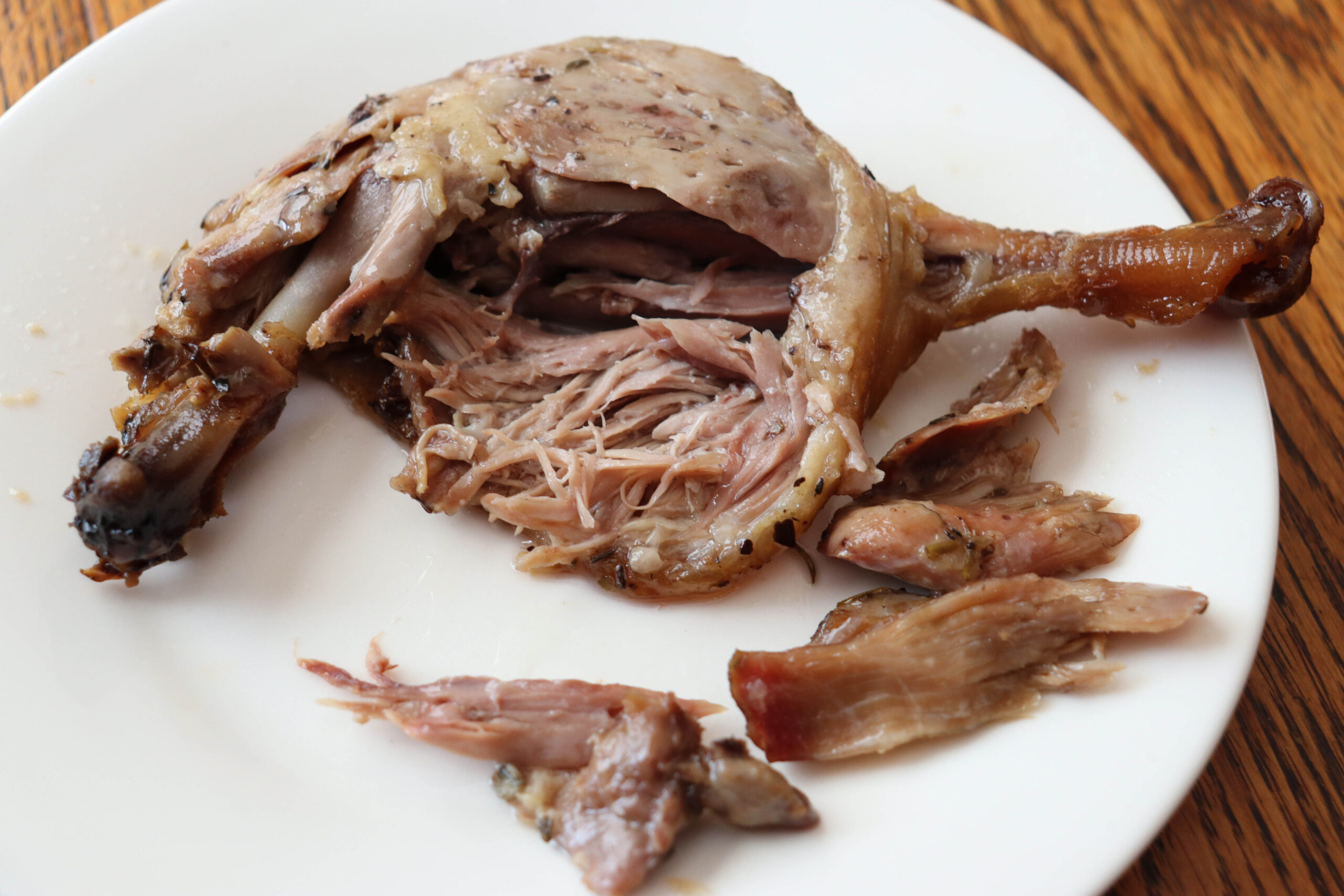
Duck confit are duck thighs that have been slow-cooked in duck fat. This gives the duck a tender, melt-in-your mouth texture that makes your guests begging for more! As an alternative, you can use plain duck thighs that are slow-cooked without the fat, but it won’t be quite the same. In Paris, you can buy duck confit already cooked in cans (see photo below) and you will see fresh duck confit sold by many Paris butchers.
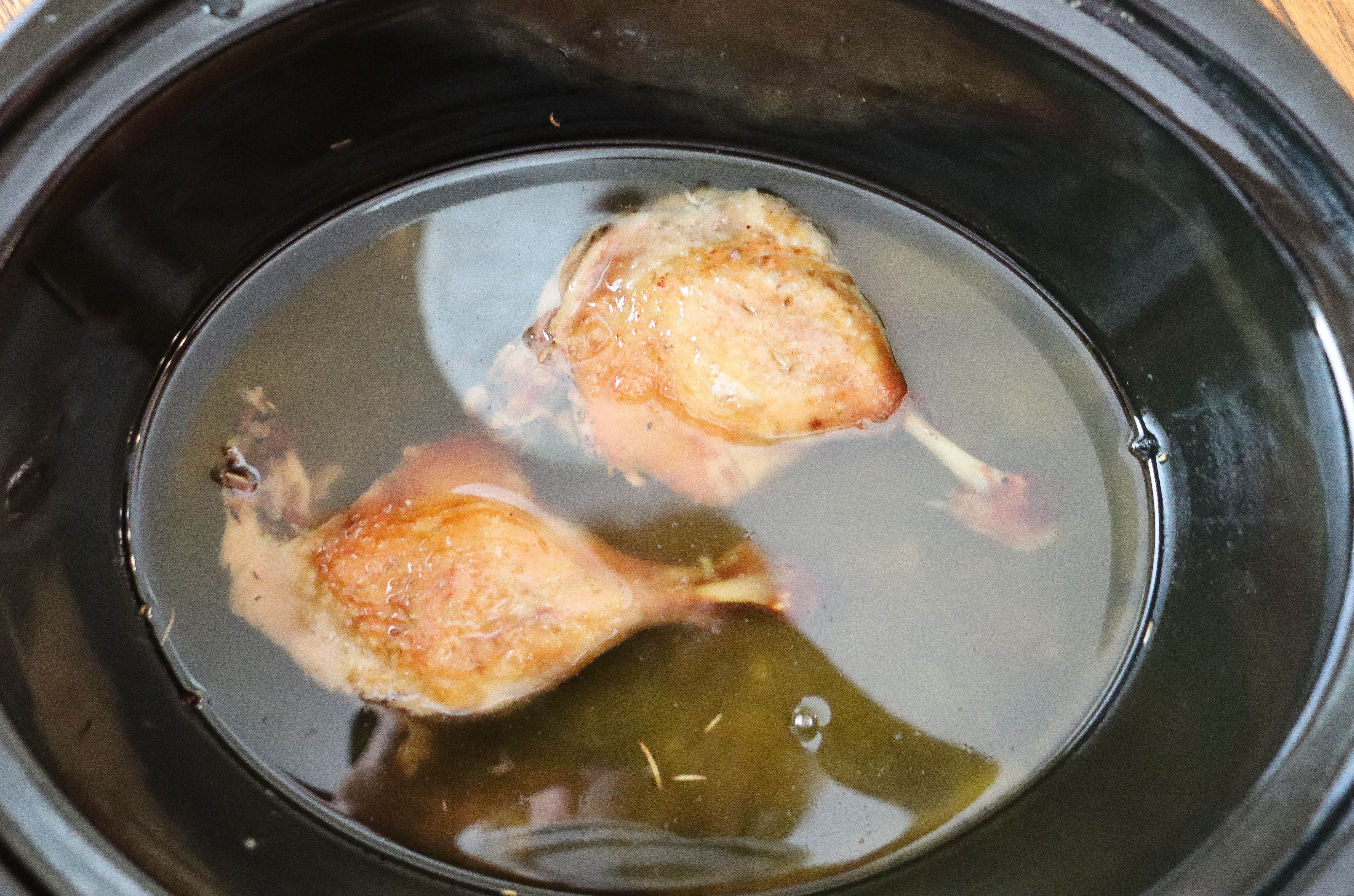
If you don’t have easy access to duck confit, you can buy it online or make it yourself. This involves first marinating the duck thighs with various herbs and spices, then slow-cooking them in duck fat for at least four hours until the meat becomes very tender (see bottom of post for more details).
Duck Confit sold in cans in Paris; Tender, fall-off-the bone Duck Confit
Assembling the Cassoulet
There is no set formula for layering your Cassoulet, other than placing the beans on the bottom and sprinkling the bread crumbs on top before baking. However, I’ve placed the smaller cuts of meat (lamb) toward the bottom of the Cassoulet and the larger cuts (i.e. duck confit and sausages) on top. (Yes, there is ‘method to the madness’ after all)!
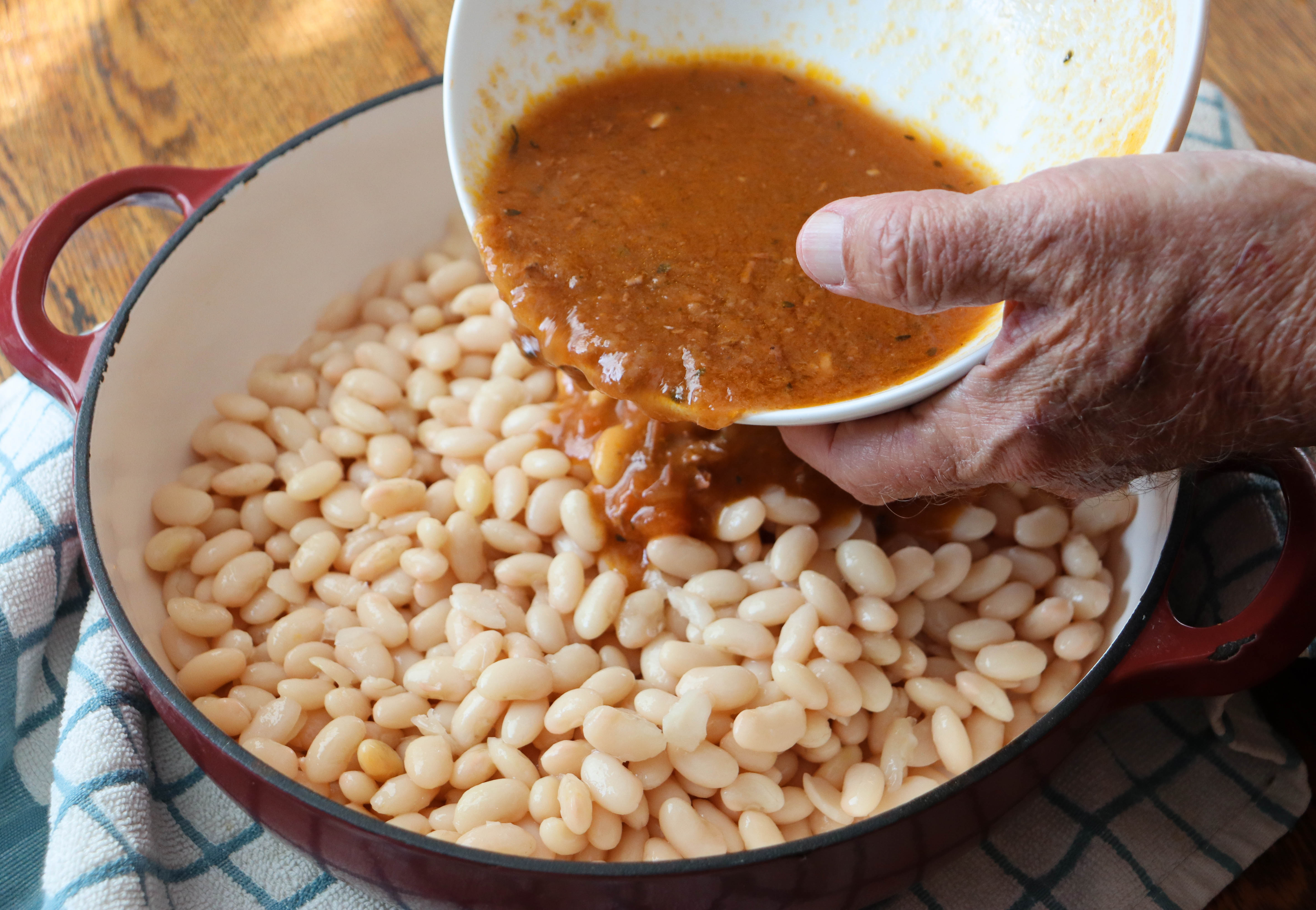
After cooking the lamb and bacon, strain the liquid from the meat. The cooking juices will then be used to flavor the beans and remainder of the cassoulet.
Mix the cooking juices into the cooked beans.
Next, layer the slow-cooked lamb and carrots on top, followed by the duck confit and cut sausages.
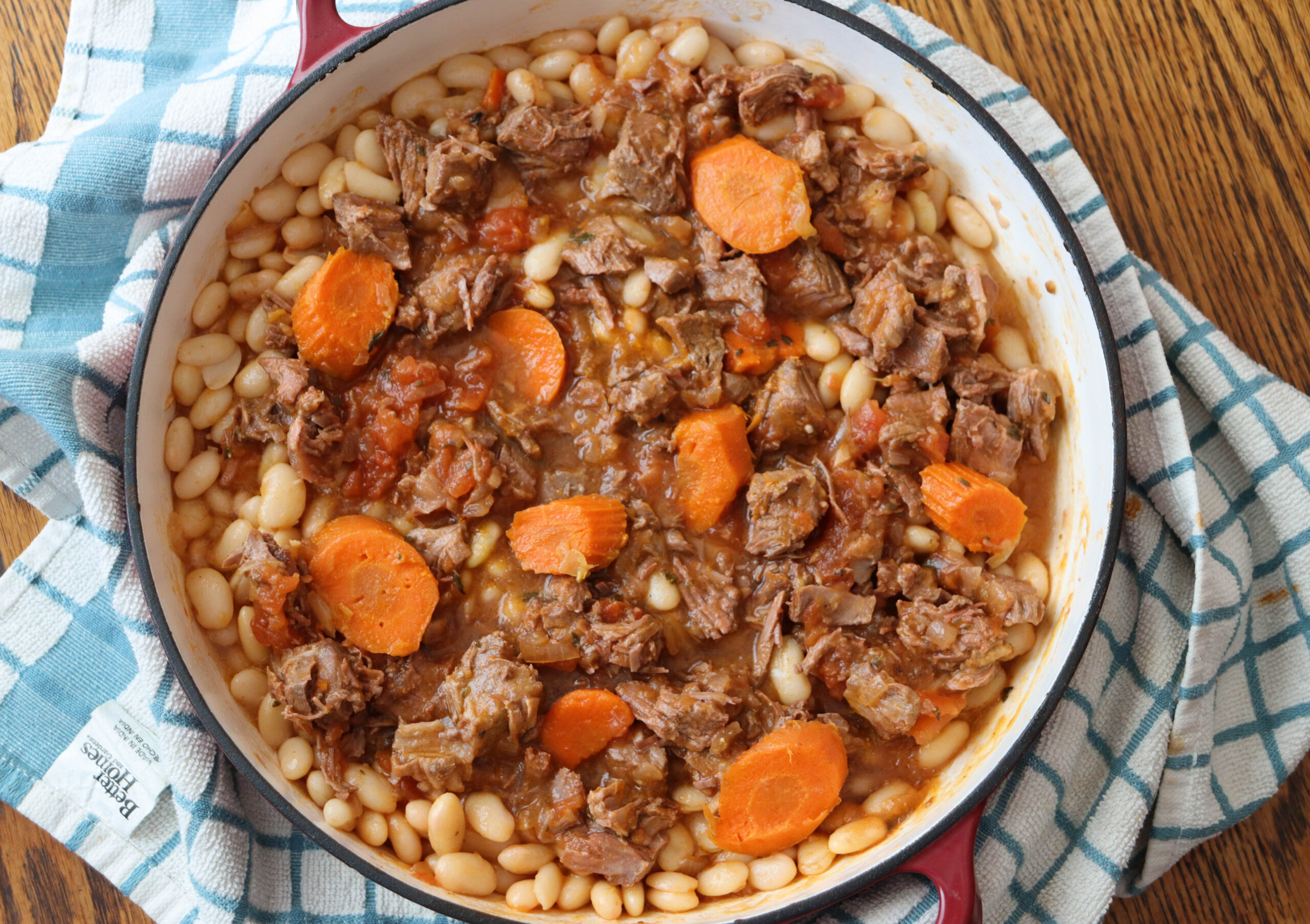

Finally, add the pieces of bacon on top, then finish with bread crumbs.
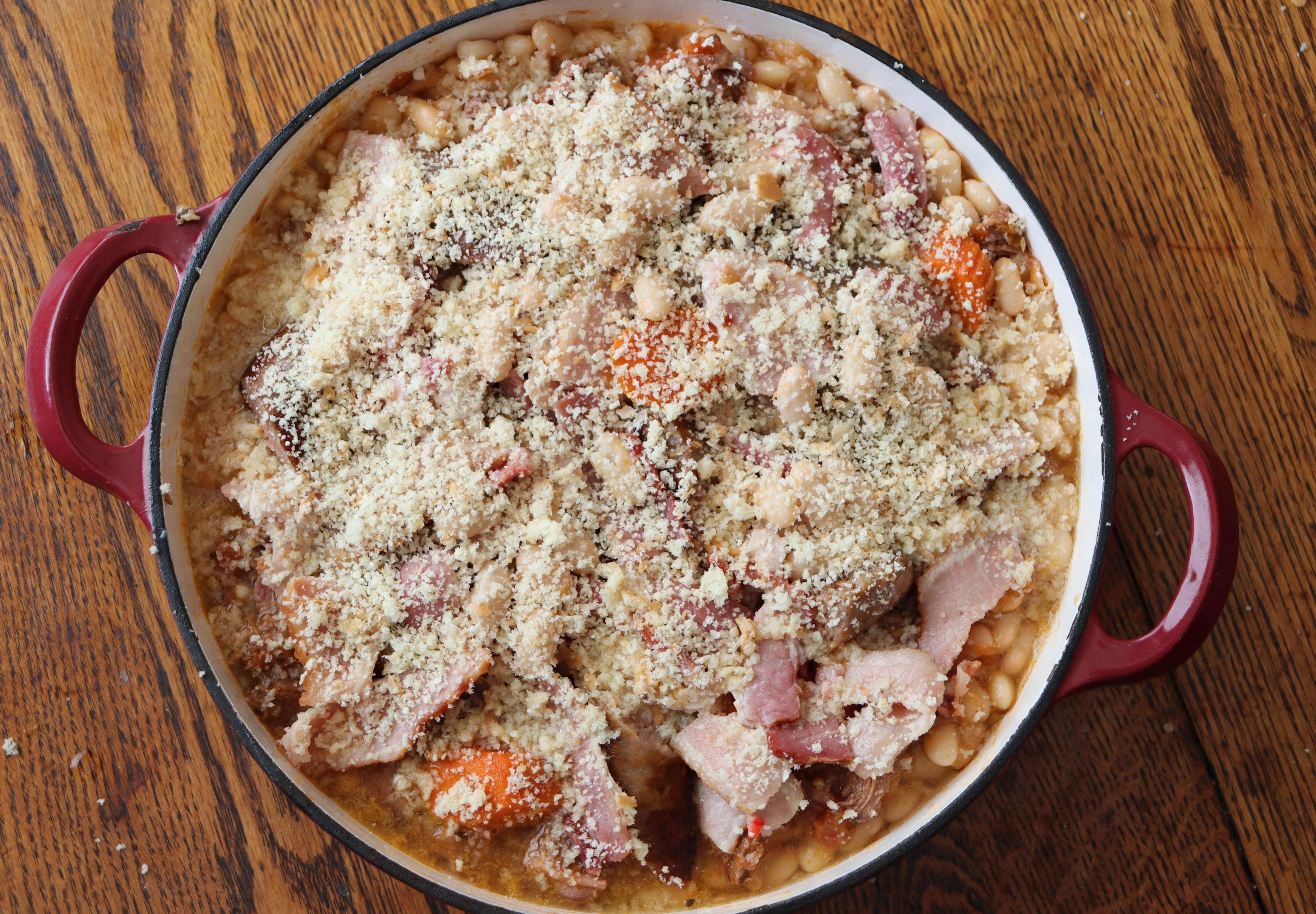
Yum, I think I’ll have seconds!
A brief word about making your own Duck Confit
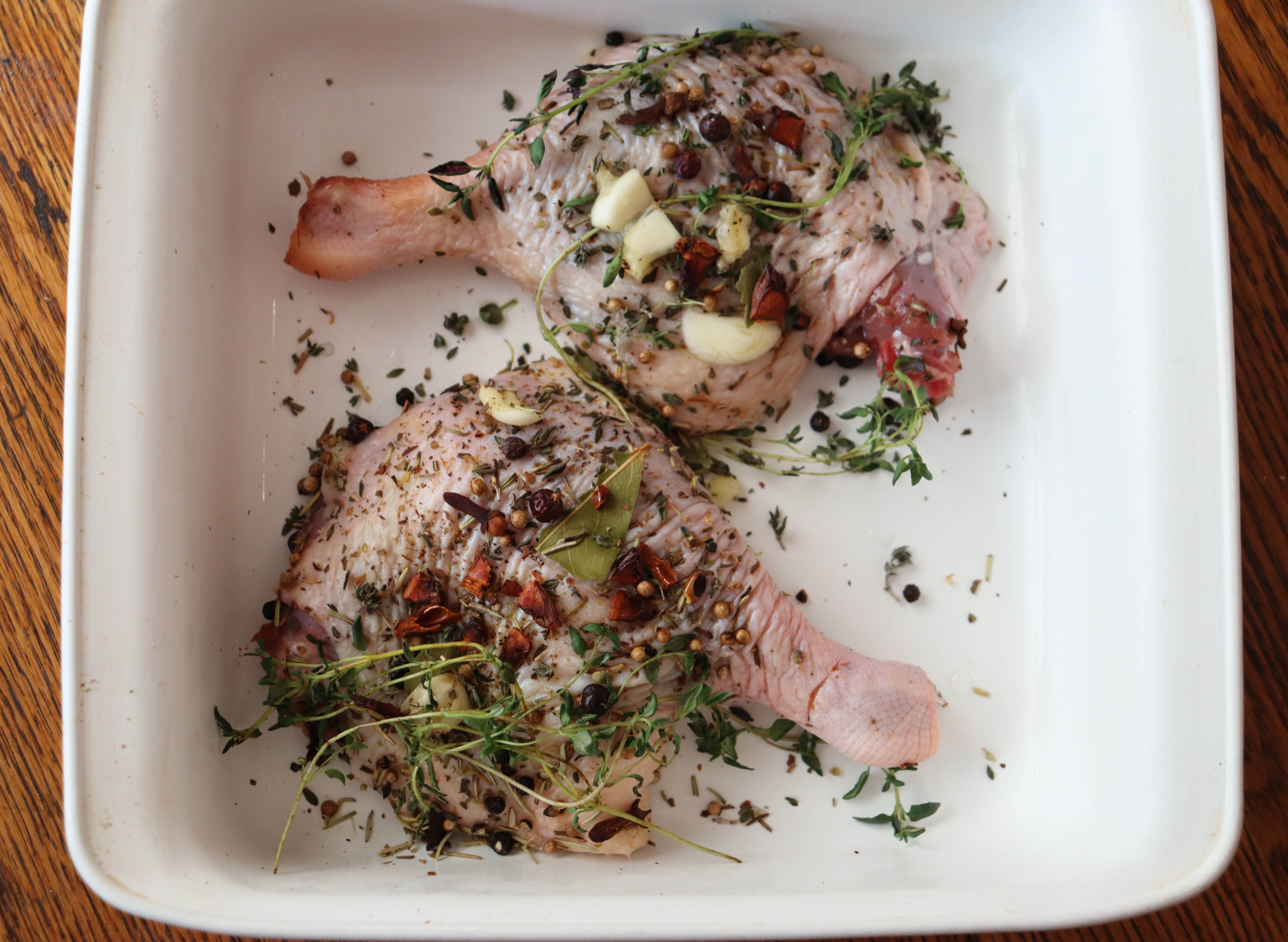
First, rub the raw duck thighs with a little salt and a combination of garlic cloves, black peppercorns, fresh thyme, rosemary, chopped shallots, coriander seeds, cloves (you don’t need to use them all)! Place them in a shallow pan, cover with plastic wrap and let sit for 6-8 hours or overnight.
Remove all the rub ingredients and pat dry with a piece of damp paper towel. Place the thighs snugly into a metal or ceramic pan, then pour over enough melted duck fat to cover the duck. Cover the pan with foil and bake at 210 F. for 3-4 hours until the meat is very tender and ‘falls off the bone.’ Alternatively, you can cook them in a slow-cooker for 4-5 hours or longer. (For a detailed recipe for Duck Confit, refer to Nagi Maehashi’s blog Recipe Tin Eats: https://www.recipetineats.com/duck-confit/
Quick Soak the beans: cover beans in water, bring to boil for 1-2 minutes, cover and remove beans from heat. Let beans soak for one hour, then they should be ready for cooking. Alternatively, cover the beans with water and soak overnight. To cook the beans, place 2 Bay leaves in the pot, along with 1/4 coarsely chopped onion and a little salt. Make sure the beans are still covered with water; cook over medium-low heat for about 1-2 hours until the beans are no longer crunchy. Be careful not to over-cook the beans or they will become too 'slushy.' When cooked, remove the Bay leaves and onion pieces. Cut the bacon pieces into strips 1/4 inch-wide and 1-inch long. Cut the lamb (or pork) into 1-inch squares. Brown the lamb (or pork) and bacon pieces for several minutes in either a little duck fat or olive oil. Remove the meat and drain on a plate lined with kitchen paper. NOTE: if you are not using Duck Confit (duck which has been slow-cooked in duck fat) you could elect to brown and cook the two duck thighs along with the lamb and bacon until the meat becomes soft. Using the fat retained in the pan, sauté' the chopped onion and garlic for several minutes. Add the meat back into the pan, along with the peeled and chopped tomatoes and tomato paste. Add the Bouquet Garni (2 sprigs of thyme leaves tied to two Bay leaves) and paprika (if using) and cover the lamb/bacon with the cooking liquid from the beans. Cook for several hours until the lamb (or pork) is soft and tender. Half way through the cooking process, add the chopped carrots. When the lamb is soft and the carrots are cooked through, add salt to taste. Strain the liquid from meat and set aside. Slice the two sausages in half lengthwise, brown each side on the stovetop over medium heat until the meat is cooked through. For the final cooking and assembly of the dish: place the cooked beans on the bottom of a large pot or casserole dish. Pour the strained cooking liquid from the lamb/bacon on the beans and combine. Top up with a little chicken stock if the mixture has become a little too dry. Spread the cooked lamb and carrots on top of the beans, followed by the two duck confit pieces, sausages, and then bacon. Press the mixture down slightly, then cover with bread crumbs. Cover and bake for 25 minutes, then increase the oven temperature to 380 F. for several minutes to brown the bread crumbs. Garnish with chopped parsley. If confit duck thighs are not available from butchers or though online specialty stores, you can make then yourself (see more information at end of post).French Cassoulet
Print Recipe
Ingredients
Instructions
Notes




6 Comments
Chef Mimi
September 12, 2025 at 12:58 pmI love cassoulet! My version is better than what I had in Castelnaudary! It was just too bland.
Fran Flint
September 12, 2025 at 1:03 pmI know what you mean! That’s why I add a little unsmoked paprika into the sauce (and have been known to also sprinkle a few drops of Tabasco sauce on top! Sshh, don’t tell anybody)!
David Scott Allen
September 15, 2025 at 3:38 amI love making cassoulet but you really need to have a good crowd of people or you end up with weeks of leftovers. You just cannot make a good, small cassoulet. I am lucky that my local butcher makes Toulouse sausages and he will make me ones without garlic. Unlike you and Mimi, I like the simplicity and mine is probably more bland because I can omit the garlic. Have you ever read Cassoulet Confessions by Sylvie Bigar? It is a charming book about her journey to the perfect cassoulet.
Fran Flint
September 15, 2025 at 7:37 amWow! A Book about cassoulet? I’ll definitely have to check this book out at the library! Dang! I didn’t realize I could buy Toulouse sausages in the US!
angiesrecipes
September 15, 2025 at 4:31 amI made an easy version before…some day I need to make this classic again with the required ingredients 🙂 Yours looks incredible!
Fran Flint
September 15, 2025 at 7:38 amThank you for your reply. Angie!